
Job marketing campaigns: spread your vacancies online
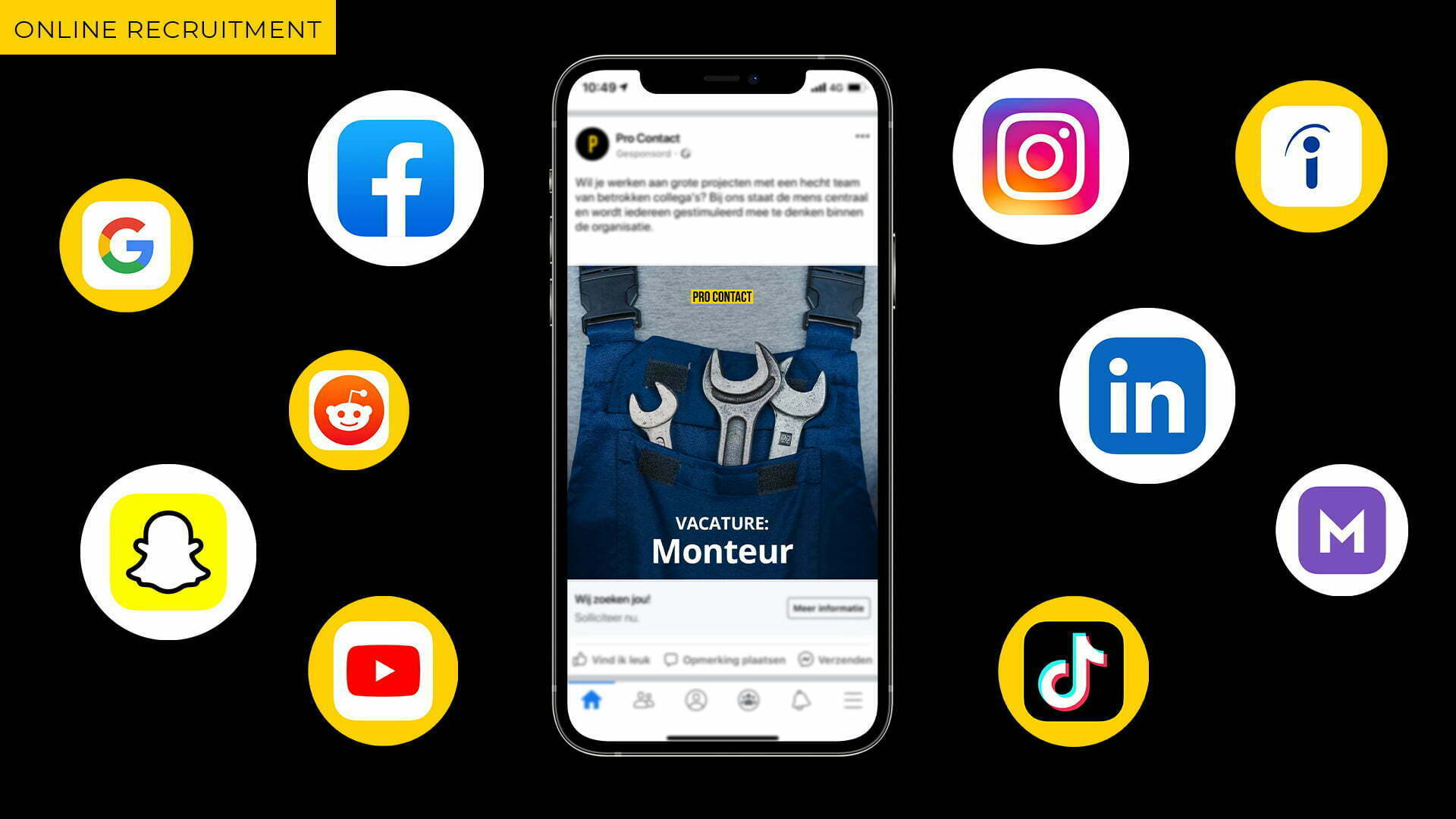
Job marketing campaigns are the most efficient way to show relevant vacancies to your target group, with the aim of attracting new colleagues. Because job marketing uses a combination of channels, you're visible in every relevant place online. Over the past ten years, the way people look for jobs has changed enormously. At the start of this millennium we were still circling ads in red felt-tip pen in De Telegraaf and the Algemeen Dagblad. With the rise of the internet, the focus shifted more and more from print to digital. And now, in 2021, it's practically impossible to find the right talent for your organisation without job marketing.
Another advantage of job marketing: your online campaigns don't just reach active jobseekers. With the right message, you can also tempt people who are perfectly happy where they are to make the switch. And it's international. You can literally reach the whole world from your study or office. Drivers from Poland, programmers in Romania or British lawyers: all you need to do is translate the copy and adjust the targeting. A few clicks and you're visible in the Netherlands, Europe or the whole world.
In this blog we take you through every aspect of job marketing. Because a nice piece of copy alone won't cut it. Good job marketing is built on a strong concept, good copy, great visuals and a well-thought-out online recruitment strategy.
The job marketing concept: who are you?
Literally, job marketing means ‘marketing your job’. In essence, it's about showing why this job is so great and why people should come and work at your organisation. Do you offer unlimited holiday days? Can employees take a course at the company's expense? Or maybe you have other unique features that make the job and the company stand out. A good job marketing campaign naturally puts extra emphasis on those elements, because they are often the triggers that get your target group to respond to the vacancy that pops up. These ‘reasons to switch’ form the basis of a job marketing campaign.
Above all, remember that you don't only want to reach people who are looking for a job right now, but also want to get on the radar of those top performers who currently work for one of your competitors. We sometimes compare it to Apple's marketing strategy. Even people who already have a mobile phone that works perfectly are tempted when Apple launches the latest iPhone. Not because their old phone no longer works, but because Apple knows exactly how to play on the consumer's feelings. Job marketing is no different.
Copy and visuals: your shop window
Once you know which reasons to switch you'll use to trigger your target group, it's time for a good copywriter and designer to get to work on developing content for your job marketing campaign. At this stage you're already working with the online recruitment specialists, because it's important to know which channels the content is being developed for. Copy and visuals for Instagram Stories are different from those for LinkedIn. And a video for YouTube has different delivery specs than a video for Reddit. Whichever channels you choose, make sure you know exactly how the content needs to be delivered, so your job marketing campaign gets the best possible result.
Online recruitment strategy: the channels
Of course you already thought about this in the previous step, but still, the finishing touch of a job marketing campaign is a carefully chosen selection of channels. Because of course you can try to reach over-65s via Snapchat, or secondary school pupils on LinkedIn. The chances of success are just slim. The trick is to define exactly who you're looking for together with recruitment consultants, and to select the right channels based on that information. Want to recruit baby boomers? Then Facebook is an excellent channel. And if you want to attract colleagues born in 2000 or later, you're better off spending your advertising budget on Snapchat and TikTok.
Besides demographic differences like these, behaviour also plays an important role in choosing channels for job marketing campaigns. You'll find active jobseekers easily via Google Search and Indeed, while passive jobseekers are quicker to bite on YouTube, Tweakers and Instagram. And in the end, it's mainly the combination of channels that makes your job marketing campaign a success: social media, Google, job boards and niche websites together make sure you find, engage and retain your ideal target group. In the next blogs we'll zoom in on the different channels of a job marketing campaign, so you can get off to a flying start in the search for your new colleagues.
Want to know how you can use job marketing for your organisation? Get in touch and we'll be happy to talk you through the options!
Meer berichten.



Genoeg gelezen?
Schedule a no-obligation introductory meeting. In 30 minutes, you'll know if we're a good fit.